Badrinath Temple is a Hindu shrine dedicated to Lord Vishnu in the form of Badrinarayan. Located in Uttarakhand’s Chamoli district at an altitude of 3,133 metres, it is part of the Char Dham, Chota Char Dham, Panch Badri, Sapta Badri and Divya Desam traditions.
The temple stands beside the Alaknanda River between the Nar and Narayan mountain ranges. Its history is closely associated with Adi Shankaracharya, while its religious traditions include the Badrinarayan idol, Tapt Kund, the Rawal priesthood and seasonal worship during the winter closure.

Badrinath Temple at a Glance
| Detail | Information |
|---|---|
| Main deity | Lord Vishnu as Badrinarayan |
| Location | Badrinath, Chamoli district, Uttarakhand |
| Altitude | 3,133 metres above sea level |
| River | Alaknanda River |
| Main entrance | Singhdwar |
| Main idol | Black Shaligram stone idol of Lord Badrinarayan |
| Chief priest | Rawal |
| Annual accessibility | Approximately six months |
| Religious importance | Char Dham, Chota Char Dham, Panch Badri, Sapta Badri and Divya Desam |
| Winter worship | Narsingh Temple in Joshimath |
Why Is Badrinath Temple Important?
Badrinath Temple is important because it belongs to several major Hindu pilgrimage traditions. It is one of the four principal Char Dham shrines of India and the final temple in Uttarakhand’s Chota Char Dham circuit.
Its religious importance extends beyond the Char Dham Yatra:
- It is one of the principal temples of the Panch Badri group.
- It forms part of the wider Sapta Badri tradition.
- It is one of the 108 Divya Desams dedicated to Lord Vishnu.
- It is associated with Nar and Narayana.
- Its legends appear within Hindu religious and epic traditions.
- It is an important Vaishnavite pilgrimage centre.
Badrinath is the northern shrine in the principal Char Dham circuit, which also includes Dwarka, Puri and Rameswaram. In Uttarakhand’s Chota Char Dham Yatra, it is visited along with Yamunotri, Gangotri and Kedarnath.
History of Badrinath Temple
The religious history of Badrinath predates the present temple structure. The area, traditionally known as Badrikashram, appears in Hindu texts and legends associated with Lord Vishnu, Nar and Narayana, and the Pandavas.
Some historical accounts suggest that the site may once have been used as a Buddhist place of worship. Adi Shankaracharya is believed to have revived it as a Hindu shrine during the eighth century and re-established the worship of Lord Badrinarayan.
The temple was subsequently constructed or expanded under Garhwal rulers. Its high-altitude location exposed the structure to earthquakes, avalanches and severe weather, leading to several restorations over the centuries.
The Badrinath Temple seen today is therefore the result of a long religious and architectural history rather than a structure built during a single period.
What Did Adi Shankaracharya Do at Badrinath?
Adi Shankaracharya is credited with reviving Badrinath as an important Hindu pilgrimage centre during the eighth century. According to tradition, he recovered the black stone idol of Lord Badrinarayan from the Alaknanda River.
The idol was initially placed near Tapt Kund and later installed inside the temple. Adi Shankaracharya is also associated with organising the temple’s worship traditions and establishing the priesthood followed at Badrinath.
His work helped restore Badrinath’s position as one of the principal centres of Hindu pilgrimage in India.
1. The Badrinarayan Idol Was Found in the Alaknanda River
The main idol of Lord Badrinarayan is believed to have been recovered from the Alaknanda River by Adi Shankaracharya during the eighth century. He first installed it near Tapt Kund before it was moved to the temple sanctum.
The idol is:
- Made from black Shaligram stone
- Approximately one metre tall
- Depicted in a meditative posture
- Worshipped as a Swayambhu form of Lord Vishnu
- More than 1,200 years old according to temple tradition
Lord Badrinarayan is shown seated in Padmasana rather than in the standing or reclining form commonly seen at many Vishnu temples. This meditative posture reflects Badrinath’s connection with penance and spiritual contemplation.
The sanctum also contains deities associated with Nar, Narayana, Garuda, Kubera and other figures connected with the temple tradition.
2. Badrinath Temple Belongs to Several Pilgrimage Circuits
Badrinath Temple is associated with more than one Hindu pilgrimage circuit. This gives it a religious position that extends beyond Uttarakhand.
| Pilgrimage tradition | Badrinath Temple’s place within it |
|---|---|
| Char Dham | Northern shrine among Badrinath, Dwarka, Puri and Rameswaram |
| Chota Char Dham | One of Uttarakhand’s four dhams with Yamunotri, Gangotri and Kedarnath |
| Panch Badri | Principal shrine among the five sacred Badri temples |
| Sapta Badri | Part of the seven temples dedicated to different forms of Lord Vishnu |
| Divya Desam | One of the 108 sacred Vishnu temples recognised in the Vaishnavite tradition |
This association with multiple traditions makes Badrinath important to pilgrims travelling through Uttarakhand as well as devotees completing the wider Char Dham circuit across India.
3. Tapt Kund Is a Natural Hot Spring Below the Temple
Tapt Kund is a natural hot-water spring located immediately below Badrinath Temple. Its water remains at approximately 45°C despite the cold climate and high altitude.
Pilgrims traditionally bathe in Tapt Kund before entering the temple for darshan. The bath is regarded as a ritual act of purification rather than a formal requirement for every visitor.
The water contains sulphur, but claims about curing illnesses should be understood as traditional beliefs and not as verified medical advice.
Tapt Kund is significant because:
- It is directly connected with Badrinath’s darshan tradition.
- Its water remains naturally warm in a cold Himalayan environment.
- It is regarded as sacred by pilgrims.
- It is located close to the temple entrance.
Visitors should use the bathing area carefully, particularly when it is crowded or the surrounding surfaces are wet.
4. The Rawal of Badrinath Temple Traditionally Comes from Kerala
The chief priest of Badrinath Temple is known as the Rawal. By tradition, the Rawal is a Namboodiri Brahmin from Kerala.
This custom is associated with Adi Shankaracharya, who was born in Kerala and played a central role in reviving the Badrinath shrine. The tradition creates a religious connection between southern India and the northern Himalayan temple.
The Rawal leads important temple rituals and worship during the period when the shrine is open. The position follows established religious qualifications and temple customs rather than local hereditary succession.
The Kerala priesthood is one of Badrinath Temple’s most distinctive continuing traditions.
5. Badrinath Temple Remains Closed for Approximately Six Months
Badrinath Temple remains closed for approximately six months each year because winter brings heavy snowfall and makes the area inaccessible.
Before the temple closes, prescribed rituals are completed and a separate Utsav Murti is taken to Joshimath. Winter worship continues at Narsingh Temple until Badrinath reopens for the next yatra season.
The annual closure does not mean that the religious tradition stops. Worship continues at the winter seat while the main temple remains inaccessible.
The opening and closing dates change every year according to religious traditions and formal announcements. Travellers should check the current dates before planning their visit rather than relying on the previous season’s schedule.
Architecture of Badrinath Temple
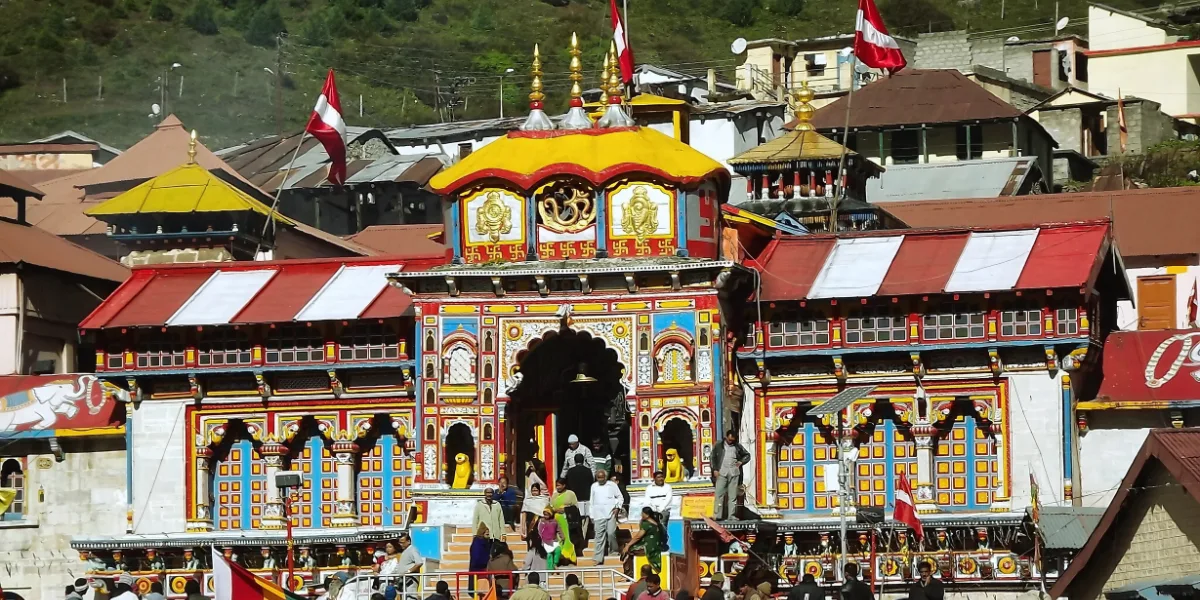
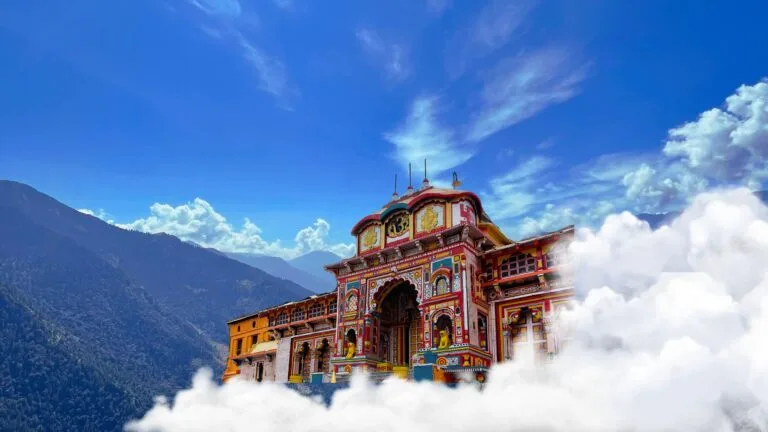
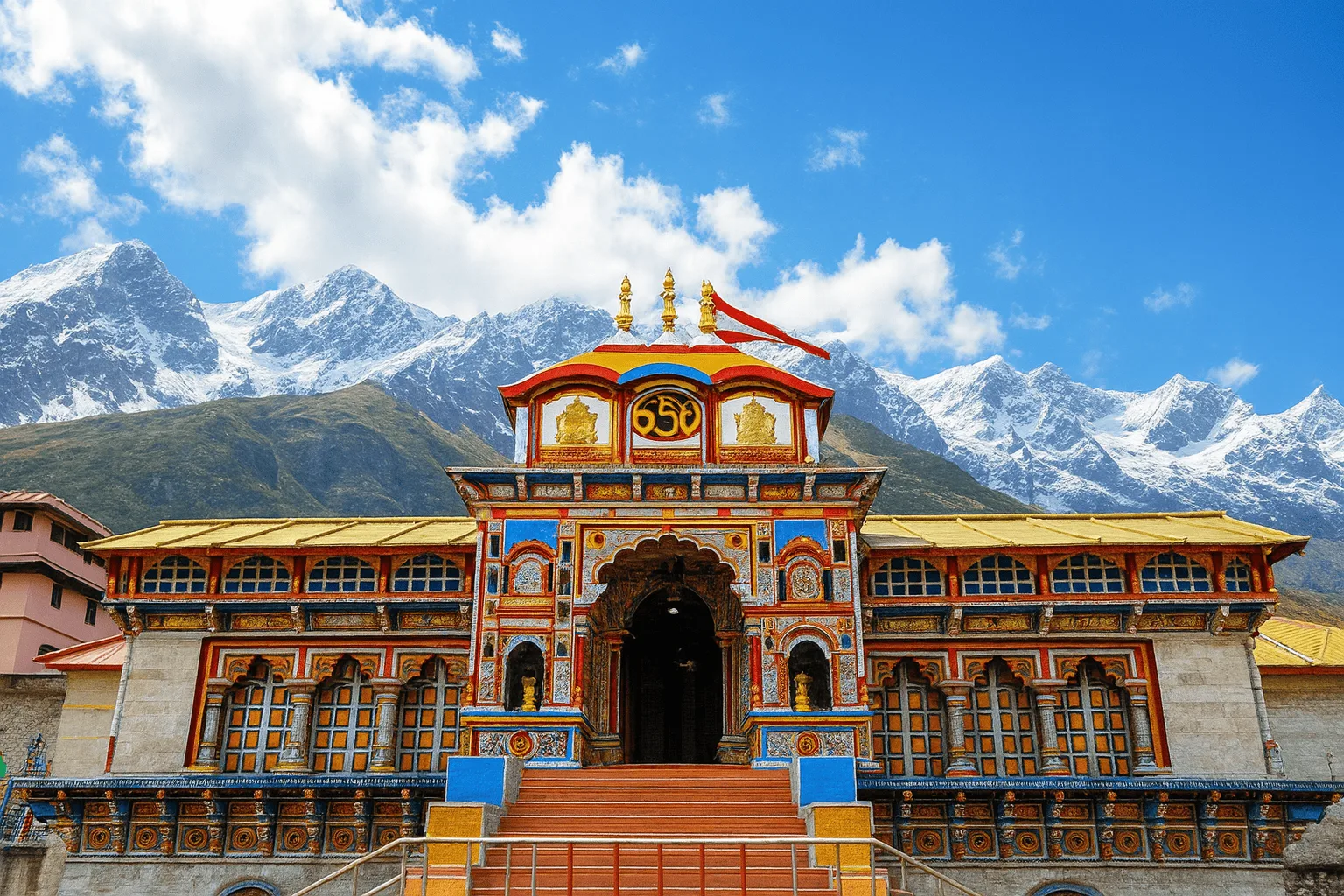
Badrinath Temple has a colourful Himalayan façade and a prominent arched entrance known as the Singhdwar. The structure is divided into three principal sections:
- The Garbhagriha, or sanctum
- The Darshan Mandap, where worship takes place
- The Sabha Mandap, where pilgrims gather
The black stone idol of Lord Badrinarayan is placed inside the sanctum. Other deities and figures associated with Lord Vishnu and the Badrinath tradition are also represented within the temple complex.
The temple has undergone multiple repairs and restorations because of earthquakes, avalanches and severe Himalayan weather. Its present appearance reflects different stages of construction and restoration.
Why Is the Place Called Badrinath?
The name Badrinath is connected with the legend of Lord Vishnu and Goddess Lakshmi.
According to the tradition, Lord Vishnu meditated at this location while exposed to harsh Himalayan conditions. Goddess Lakshmi took the form of a Badri tree and protected him. The place consequently became known as Badrinath, meaning the Lord of Badri.
The wider region is also called Badrikashram in religious tradition. Its identity is closely linked with meditation, penance and the worship of Lord Vishnu.
Nar and Narayana at Badrinath
Nar and Narayana are believed to have performed penance at Badrikashram for the welfare of the world. The two mountain ranges surrounding the temple are also known as Nar and Narayan.
Their association supports Badrinath’s identity as a place of meditation rather than only a site of ritual worship. Lord Badrinarayan’s seated posture further reflects this connection with spiritual discipline and contemplation.
Was Badrinath Originally Associated with Lord Shiva?
A local legend says that Badrinath was once associated with Lord Shiva and Goddess Parvati. Lord Vishnu is believed to have appeared as a crying child and requested the place for meditation.
The account belongs to religious tradition rather than documented architectural history. It is commonly used to explain the sacred relationship between the Vishnu shrine of Badrinath and the Shiva shrine of Kedarnath.
Both temples later became central parts of Uttarakhand’s Chota Char Dham Yatra.
The Pandavas and Badrinath
The Badrinath region is associated with the Pandavas’ final journey towards Swargarohini. According to the Mahabharata tradition, the Pandavas travelled through this Himalayan area while making their final ascent.
Several nearby places retain connections with this journey, particularly around Mana Village:
- Bheem Pul
- Vyas Gufa
- Ganesh Gufa
- Saraswati River
- The route towards Satopanth and Swargarohini
These locations connect the temple with the wider religious geography of the Mahabharata. Detailed information about these sites belongs in a separate guide to places around Badrinath.
What Happens During the Winter Closure?
The seasonal closure of Badrinath follows an established religious process.
A separate Utsav Murti is taken to Joshimath, where winter worship continues at Narsingh Temple. The main temple at Badrinath remains closed because snow, freezing temperatures and restricted road access make regular worship at the high-altitude shrine impractical.
When the temple reopens, prescribed ceremonies are performed before regular darshan begins for the new pilgrimage season.
This tradition allows worship to continue throughout the year even though the main shrine is accessible for only part of it.
Important Facts About Badrinath Temple
- Badrinath Temple is dedicated to Lord Vishnu as Badrinarayan.
- It is situated at an altitude of 3,133 metres.
- The temple stands on the banks of the Alaknanda River.
- The main idol is made from black Shaligram stone.
- Adi Shankaracharya is credited with reviving the shrine in the eighth century.
- The chief priest is traditionally a Namboodiri Brahmin from Kerala.
- Tapt Kund is located immediately below the temple.
- Badrinath is part of several Hindu pilgrimage traditions.
- The temple remains closed for approximately six months.
- Winter worship continues at Narsingh Temple in Joshimath.
- A separate Utsav Murti is taken to Joshimath during the closure.
- The temple has been restored several times after natural damage.
What Should Pilgrims Know Before Visiting?
Badrinath is a high-altitude pilgrimage destination, and its temple is accessible only during the announced yatra season.
Before travelling:
- Confirm the current opening and closing dates.
- Complete the required Char Dham registration.
- Check road and weather conditions.
- Carry warm clothing even during the summer months.
- Allow enough time for the mountain journey.
- Follow the temple’s current darshan instructions.
- Book accommodation in advance during busy periods.
- Senior citizens should plan a slower schedule with adequate rest.
Darshan timings, puja charges, road conditions and opening dates can change. They should be verified separately before travel rather than treated as permanent historical facts.
Frequently Asked Questions
Who built Badrinath Temple?
The shrine has ancient religious origins. Adi Shankaracharya is credited with reviving it in the eighth century, while Garhwal rulers later constructed or expanded the temple. The structure has undergone several restorations.
Which god is worshipped at Badrinath Temple?
Lord Vishnu is worshipped as Lord Badrinarayan. The main black stone idol depicts him seated in a meditative posture.
What is the altitude of Badrinath Temple?
Badrinath Temple is situated at an altitude of 3,133 metres above sea level in Chamoli district, Uttarakhand.
Where was the Badrinarayan idol found?
According to temple tradition, Adi Shankaracharya recovered the idol from the Alaknanda River. It was initially installed near Tapt Kund and later moved to the temple.
Why does the Rawal come from Kerala?
The tradition is associated with Adi Shankaracharya. The chief priest, known as the Rawal, is traditionally selected from Kerala’s Namboodiri Brahmin community.
Is Badrinath Temple open throughout the year?
No. The temple remains closed for approximately six winter months because of heavy snowfall and restricted access.
Where is Badrinath worship performed in winter?
Winter worship continues at Narsingh Temple in Joshimath. A separate Utsav Murti is taken there after the Badrinath shrine closes.
Is Badrinath Temple part of both Char Dham circuits?
Yes. It belongs to the principal Char Dham circuit across India and Uttarakhand’s Chota Char Dham Yatra.
What is Tapt Kund?
Tapt Kund is a natural hot spring immediately below Badrinath Temple. Pilgrims traditionally bathe there before darshan.
Why is Badrinath Temple historically important?
Its importance comes from its ancient religious traditions, association with Adi Shankaracharya, inclusion in several pilgrimage circuits and continuing worship of Lord Badrinarayan.
Conclusion
Badrinath Temple is more than one stop on the Char Dham Yatra. Its history connects ancient Hindu traditions, Adi Shankaracharya’s revival of the shrine, Garhwal restoration, the Kerala Rawal priesthood and year-round worship maintained through its winter seat in Joshimath.
The five defining facts remain central to understanding the temple: the Badrinarayan idol was recovered from the Alaknanda, the shrine belongs to several pilgrimage circuits, Tapt Kund flows below it, the Rawal traditionally comes from Kerala, and worship continues even during the six-month winter closure.