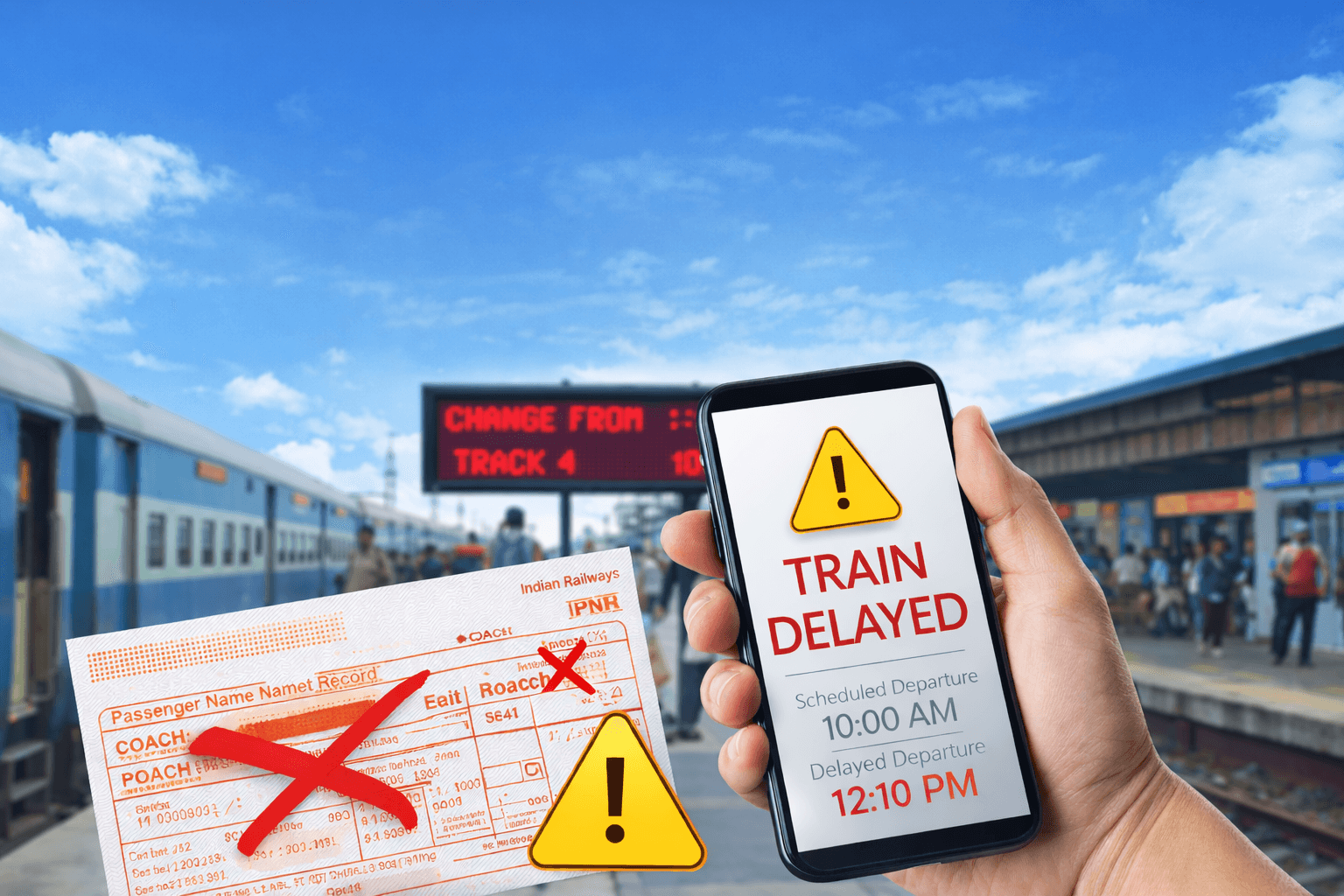
You know that sinking feeling when you are already packed, mentally halfway to your destination, and then a message pops up saying your train is late or your seat has changed. It can throw off hotel check-ins, family pickups, even your mood. The good news is that a lot of last-minute travel chaos is manageable if you know what to check and what to do next. Most of the time, the problem is not the delay itself, it is the confusion around it.
A quick habit that helps is to look up your pnr status soon after booking so you are not surprised on travel day. Then, closer to departure, keep an eye on train running status so you can adjust your plan before the crowd at the platform tells you what you could have known earlier. If that sounds basic, trust me, it is the difference between a rough day and a reasonably smooth one.
Why last-minute disruptions happen more than we think
Indian Railways has improved punctuality in recent years, but delays are still part of the ecosystem, especially on long routes. In 2024, national punctuality figures showed progress, yet even a modest average delay can ripple into missed pickups or late check-ins. Premium services are generally more on time, but they are not immune either. Weather, congestion, signal holds, maintenance blocks, and knock-on effects from earlier routes all add up.
Seat changes are another common stress point. They usually happen because of charting rules, last-minute upgrades, coach reconfigurations, or cancellations that trigger reallocation. RAC and waitlist movement can also shift seat numbers right before the final chart is prepared. None of this is personal. It is just how a huge network keeps reshuffling to fit everyone.
Step one: get clarity before you react
When something changes late, your first job is to replace panic with information. Do this in order:
- Confirm what exactly changed.
- Was it the departure time, expected arrival, platform, coach, or something reflected in your pnr status such as berth or coach rearrangement? Each has a different fix.
- Check the latest official updates.
Real-time updates come from railway enquiry systems that track current position and delays. These update frequently, so even a 10-minute old screenshot may be stale. - Re-calculate your personal timeline.
Update three things: when you leave home, when you eat, and who needs to be informed. Those are the dominoes that fall fastest.
A simple way to keep this tidy is to open your travel notes and rewrite your plan with the new times. It sounds boring, but it makes you feel in control.
Step two: if the train is delayed, protect your trip
A delay is not always a disaster. Here is how to make it boring instead of brutal.
Adjust your arrival expectations early
If the delay is building up, assume it may grow by the next major junction. Long routes can stack small halts into bigger ones. Planning for that mental buffer helps you avoid frustration later.
Inform the people waiting for you
Call or message the person picking you up, the hotel, or friends you are meeting. When you do it early, you look responsible. When you do it late, you look like the train ate your phone.
Use station time smartly
If you are at the station already, find a calm spot, top up water, and eat something light. Fatigue makes every delay feel twice as long.
Keep a fallback map ready
Know your next two major stops. If something extreme happens, you will already have a sense of where you could get a bus or a different train. You may never use it, but having it reduces stress.
Step three: if your seat or coach changes, settle it fast
Seat changes feel personal because they affect comfort. But they are usually solvable calmly.
Look at the final chart update
Until the chart is finalized, your berth can still move. Once it is done, your seat number is stable unless there is a technical swap. RAC passengers are allowed to board and get a sitting berth that may convert to a full berth if cancellations happen.
Find your coach position before the train arrives
Trains stop briefly at many stations. If you wait for the train to roll in and then search for your coach, you burn energy and time. Check the coach order display on the platform and walk there in advance.
Talk to the TT only after boarding
If you think you were moved unfairly or split from family, board first. Then speak to the TT with your ticket handy. A calm, specific request gets better results than a loud complaint.
Be flexible about berth types
Side lower, upper, middle, whatever. If your goal is reaching the destination comfortably, a small berth change is not worth ruining your headspace.
A quick decision table for common last-minute issues
| What happened | What it usually means | What you should do now |
| Delay under 30 minutes | Minor congestion or short operational halt | Stick to plan, update pickup time |
| Delay growing past 60 minutes | Route stacking delays at multiple stops | Recalculate arrival, inform hotel or family |
| Platform change | Train arriving on different line | Move early, do not wait for last call |
| Coach/berth reassigned | Charting or upgrade reshuffle | Check chart, locate coach, board calmly |
| Still RAC close to departure | Chance of confirmation if cancellations occur | Board, check chart, speak to TT if needed |
Booking the smart way next time with redRail
A lot of last-minute pain starts at booking. redRail helps because it keeps your ticket info organized and makes tracking straightforward. When you book through redRail, save these habits:
- Check your ticket details the same day and set a reminder for the night before travel.
- Screenshot your seat and coach info once the chart is out, so you are not hunting for signal at the gate.
- Travel with one small backup plan: a contact number, a snack, and a flexible mind.
None of this is complicated. It is just the kind of routine that frequent travellers build without thinking.
The mindset that saves more trips than any app
Here is the honest part: delays and seat changes are annoying, but they are rarely trip-ending. What hurts is when you feel powerless. The moment you get clear updates, adjust your plan, and stop fighting reality, the day gets easier.
So next time something shifts at the last moment, breathe, check the facts, and move one step at a time. Your trip is still yours to enjoy, even if the timetable is having a bad day.