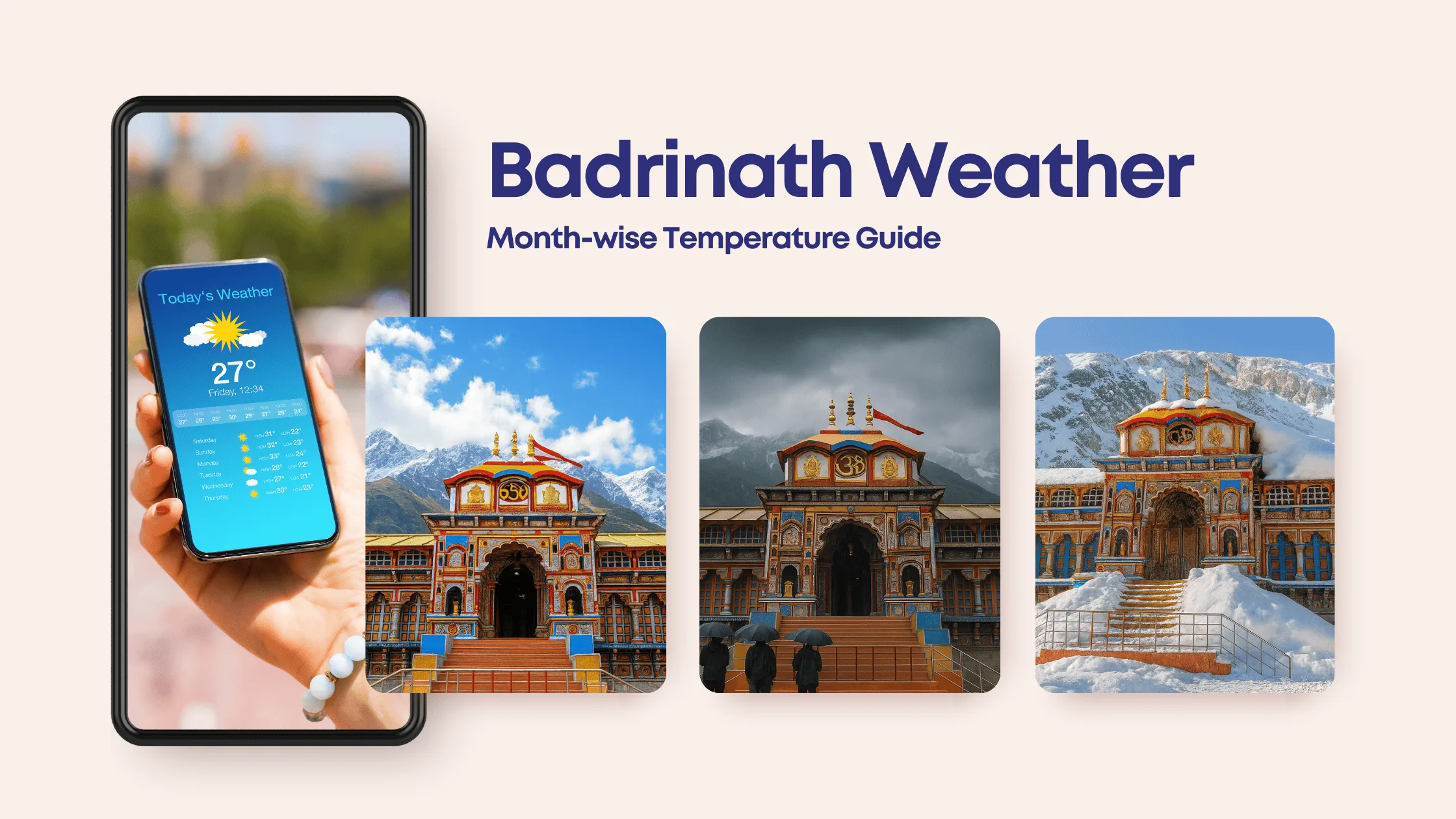
The best time to visit Badrinath is from May to June and September to October. May and June are suitable for most pilgrims because the temple is open, accommodation and transport are fully operational, and daytime weather is comparatively comfortable. September and October offer fewer crowds, but mornings and nights are considerably colder.
July and August fall within the monsoon period. Badrinath Temple remains open, but heavy rainfall can cause landslides, roadblocks and unexpected delays along the mountain route. Winter is not suitable for temple darshan because Badrinath Temple closes and the town receives snowfall.
| Travel preference | Recommended period |
|---|---|
| Best overall time | May to June |
| Comfortable weather | June |
| Fewer crowds | September to October |
| Best for Senior-citizen | May, June or September |
| Monsoon Season | July to August, with additional caution |
| Snowfall around Badrinath | Late autumn and winter |
| Badrinath Temple darshan | During the officially announced opening season |
Table of Contents
What Is the Best Time to Visit Badrinath?
May, June, September and October are the best months to visit Badrinath. The right month depends on whether you prioritise comparatively comfortable weather, lower crowds or easier hotel availability.
May to June: Best for Most Pilgrims
May and June form the main Badrinath Yatra season. The weather is comparatively manageable during the day, although mornings and nights remain cold.
These months are suitable for:
- First-time visitors
- Families travelling with children
- Senior citizens who can manage the altitude
- Pilgrims combining Badrinath with Kedarnath
- Travellers following the complete Char Dham route
This is also the busiest part of the season. Hotels, taxis and organised tour packages should be reserved in advance, particularly around weekends and important pilgrimage dates.
September to October: Best for Fewer Crowds
September and October are suitable for pilgrims who want to avoid the peak-season rush. Rainfall reduces after the monsoon, but temperatures begin falling quickly, particularly after sunset.
September offers a better balance between weather and crowd levels. October is colder and requires heavier winter clothing.
These months are suitable for:
- Travellers looking for a quieter darshan
- Couples and smaller family groups
- Pilgrims comfortable with colder mornings and nights
- Travellers who can maintain a flexible return schedule
July to August: Monsoon Travel Requires Caution
July and August are not the most reliable months for visiting Badrinath. Historical averages show approximately 25 rainy days in each of these months, making them the wettest part of the pilgrimage season.
The temple may remain open, but road travel can be affected by:
- Heavy rainfall
- Landslides
- Falling stones
- Temporary road closures
- Traffic accumulation at blocked stretches
- Changes in local traffic movement
Travellers visiting during the monsoon should keep buffer time and avoid connecting their return journey with a tightly scheduled flight or train.
November to April: Temple Closed for Winter
Badrinath Temple closes for winter on a date determined according to religious traditions. The exact closing date must be checked every year.
Once the temple closes, regular pilgrimage activity stops and many hotels and local services become unavailable. The Utsav Murti is taken to Joshimath, where winter worship continues.
Travellers interested in winter conditions or snowfall should not treat a winter visit as a regular Badrinath Temple pilgrimage.
Badrinath Weather by Month
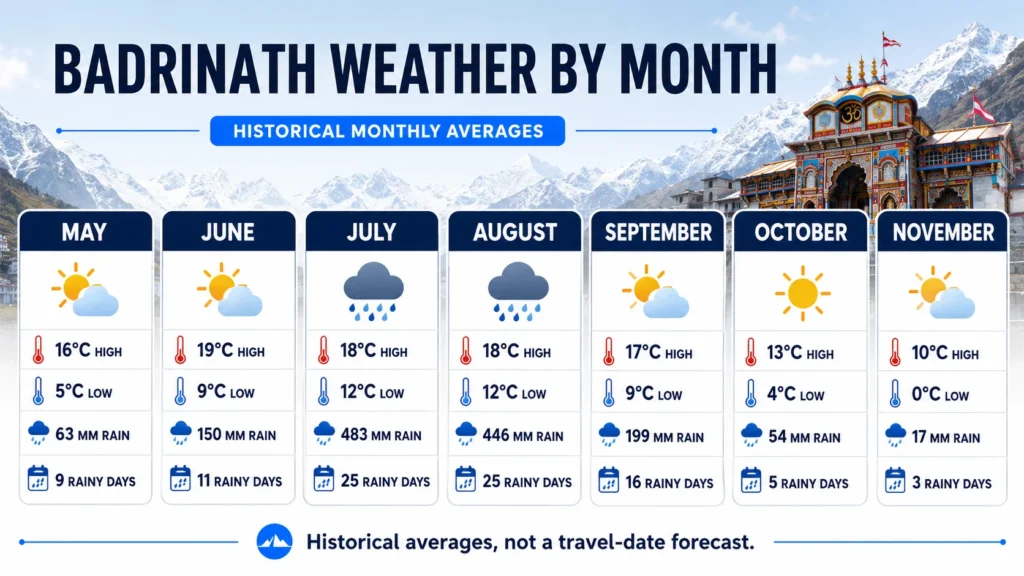
Badrinath’s weather changes noticeably across the Yatra season. The figures below are historical monthly averages, not forecasts for a particular travel date.
| Month | Average high | Average low | Average rainfall | Average rainy days | General travel conditions |
|---|---|---|---|---|---|
| May | 16°C | 5°C | 63 mm | 9 days | Cold opening period with comparatively manageable days |
| June | 19°C | 9°C | 150 mm | 11 days | Warmest and busiest part of the Yatra season |
| July | 18°C | 12°C | 483 mm | 25 days | Heavy monsoon rain and disruption risk |
| August | 18°C | 12°C | 446 mm | 25 days | Continued monsoon and possible road delays |
| September | 17°C | 9°C | 199 mm | 16 days | Retreating monsoon and fewer pilgrims |
| October | 13°C | 4°C | 54 mm | 5 days | Drier but considerably colder |
| November | 10°C | 0°C | 17 mm | 3 days | Very cold closing period |
Actual temperatures can be higher or lower than these averages. Cloud cover, rainfall, wind and time of day can make the weather feel considerably colder.
Badrinath Weather in May
Badrinath weather in May is cold, particularly during the morning, evening and night. The historical average high is approximately 16°C, while the average low is around 5°C.
May generally marks the beginning of the pilgrimage season. Some snow may remain visible on surrounding mountains, but travellers should not assume that snowfall will occur in the town during their visit.
Who Should Visit in May?
May is suitable for pilgrims who want to travel early in the season and are prepared for cold conditions. Families and senior citizens should carry proper layers rather than relying on one heavy jacket.
The opening period can attract large crowds. Travellers should confirm their hotel, vehicle and darshan plan before leaving home.
What to Pack for May
Carry:
- Thermal innerwear
- Warm jacket
- Woollen cap
- Gloves
- Warm socks
- Comfortable walking shoes
- Light rain protection
- Sunscreen and sunglasses
Badrinath Weather in June
June is the warmest month within the regular Badrinath pilgrimage season. The historical average high is approximately 19°C, and the average low is around 9°C.
Days can feel comfortable in direct sunlight, but the temperature falls after sunset. Rainfall also starts increasing as the month progresses, especially closer to the monsoon.
Is June a Good Time to Visit Badrinath?
Yes. June is one of the best months to visit Badrinath for families, first-time pilgrims and senior citizens. Transport, hotels and local facilities are generally fully operational.
However, June is also a busy month. Travellers should expect:
- High demand for rooms
- Greater traffic on the Char Dham route
- Crowds around the temple
- Longer travel times during busy dates
What to Pack for June
Pack light woollens for daytime use and a warmer jacket for the evening. Walking shoes, a compact raincoat and protected luggage are also useful.
Badrinath Weather in July
July falls within the main monsoon period. The historical average temperature ranges from approximately 12°C to 18°C, but rainfall is the larger concern.
Badrinath receives an average of approximately 483 mm of rain across 25 rainy days in July. These are historical averages, and actual rainfall varies from year to year.
Should You Visit Badrinath in July?
July is not the preferred month for travellers with a fixed itinerary. Rain can affect roads at several points between Rishikesh, Rudraprayag, Karnaprayag, Joshimath and Badrinath.
Travel may still operate, but visitors must be prepared for delays. Families with young children and senior citizens should consider May, June or September instead.
What to Pack for July
Carry:
- Waterproof jacket
- Umbrella
- Quick-dry clothing
- Rain-resistant footwear
- Waterproof covers for luggage
- Extra pair of socks
- Essential medicines
- Power bank
- Personal snacks and drinking water
Badrinath Weather in August
August continues to receive heavy monsoon rainfall. Historical data shows an average high of approximately 18°C, an average low of 12°C and around 446 mm of monthly rainfall.
Road conditions can change quickly after prolonged rain. A route that is open in the morning may experience temporary restrictions later in the day.
Is August Suitable for Badrinath Yatra?
August can be considered only when travellers have flexible dates and understand the possibility of delays. It is unsuitable for a rushed itinerary or a journey connected directly with an important return flight or train.
Before travelling, check:
- Current weather forecast
- Official road updates
- District advisories
- Hotel operating status
- Vehicle reporting time
- Conditions beyond Joshimath
Badrinath Weather in September
September is one of the best months to visit Badrinath after the monsoon. The historical average high is approximately 17°C, while the average low is around 9°C.
Rain does not disappear immediately at the beginning of September. Historical data records approximately 16 rainy days during the month, so rain protection should remain part of the packing list.
Why Visit Badrinath in September?
September offers several practical advantages:
- Lower crowds than May and June
- Comparatively moderate daytime temperatures
- Better room availability on many dates
- Less peak-season traffic
- Suitable conditions for a quieter pilgrimage
Travellers should still check the recent weather pattern because post-monsoon road restoration may continue at affected stretches.
Badrinath Weather in October
October is comparatively dry but much colder. The historical average high is approximately 13°C, while the average low falls to around 4°C.
Temperatures can approach freezing during particularly cold nights. Travellers should choose a hotel that provides adequate blankets and should confirm whether room heating is available.
Is October a Good Time to Visit Badrinath?
October is suitable for travellers who prefer fewer crowds and can manage cold weather. It may not be the most comfortable period for children, senior citizens sensitive to cold or travellers arriving without proper winter clothing.
The temple normally remains open for part of this period, but visitors must verify the officially announced closing date.
What to Pack for October
Pack:
- Thermal base layers
- Heavy winter jacket
- Woollen cap
- Gloves
- Warm socks
- Scarf or neck warmer
- Insulated walking shoes
- Lip balm and moisturiser
Badrinath Weather in November
November is extremely cold in Badrinath. The historical average high is approximately 10°C, while the average low is around 0°C.
The temple may remain open only during the period before its officially announced winter-closing date. Snowfall and freezing nights become increasingly possible as winter approaches.
November is not a dependable month for a routine Badrinath pilgrimage. Hotel availability reduces, local services begin closing, and sudden weather changes can affect travel arrangements.
Best Time to Visit Badrinath for Senior Citizens
May, June and September are the most practical months for senior citizens visiting Badrinath. These months generally offer a better balance of daytime weather, operational facilities and road accessibility.
Senior citizens should still consider the destination’s high altitude and cold climate. Helicopter or road transport reduces travel effort, but it does not remove the effects of altitude or temperature.
Before booking, confirm:
- Walking distance between the hotel, vehicle point and temple
- Availability of room heating or adequate blankets
- Room floor and elevator access
- Regular vegetarian meals
- Availability of drinking water
- Vehicle access near the hotel
- Current health suitability with their doctor
Travel Vaidya generally recommends a slower itinerary for families travelling with senior citizens rather than combining long drives with immediate temple visits.
Best Time to Visit Badrinath with Children
May, June and September are generally better for families travelling with children. These months avoid the coldest part of the operating season and the heaviest phase of the monsoon.
Parents should prepare for:
- Sudden temperature changes
- Cold mornings and nights
- Possible rain even outside peak monsoon
- Mountain-road travel
- Limited availability of specific food or medicines
Children should wear clothing in layers so that jackets can be added or removed as conditions change.
Is the Monsoon a Good Time to Visit Badrinath?
July and August are not the best months for a Badrinath pilgrimage. The main concern is not the temperature but prolonged rainfall and its effect on mountain roads.
A monsoon journey should include:
- At least one buffer day
- Flexible hotel and transport arrangements
- Waterproof clothing
- Essential medicines
- Updated emergency contacts
- Regular checks of road and weather advisories
Do not continue driving through a restricted section simply to maintain the planned itinerary. Local authorities may temporarily stop traffic when rainfall, falling stones or slope conditions make movement unsafe.
When Should You Avoid Visiting Badrinath?
Avoid planning the journey during an active heavy-rain warning, an official road closure or after Badrinath Temple has closed for winter.
You should reconsider the travel date when:
- Heavy rainfall is forecast along the route
- District authorities issue a travel advisory
- Roads beyond Joshimath are restricted
- Your itinerary has no buffer time
- A traveller is unprepared for cold or altitude
- Your return flight or train cannot accommodate delays
- Suitable accommodation is unavailable
Weather averages help with seasonal planning, but they cannot replace a current forecast or official road update.
What to Pack for Badrinath in Each Season
| Travel period | Recommended clothing and equipment |
|---|---|
| May | Thermals, warm jacket, gloves and light rain protection |
| June | Light woollens, warm evening layer and compact raincoat |
| July–August | Waterproof jacket, quick-dry clothes and protected luggage |
| September | Warm layers, rain protection and walking shoes |
| October | Heavy woollens, thermals, gloves and insulated footwear |
| November | Complete winter clothing suitable for near-freezing conditions |
Warm clothing should always remain accessible during the drive. Do not pack every jacket at the bottom of the main suitcase, especially when travelling with children or senior citizens.
Hotel and Transport Availability by Season
May and June have the highest demand for hotels and vehicles. September generally offers better availability, while fewer properties may operate as the temple-closing period approaches.
Before confirming a Badrinath hotel, verify:
- Distance from Badrinath Temple
- Actual walking route
- Room heating
- Meal plan
- Parking or vehicle access
- Elevator availability
- Room floor
- Hot-water timings
- Cancellation terms
During monsoon, a delayed arrival can affect both hotel check-in and the following day’s itinerary. A Dehradun-based operator such as Travel Vaidya can help coordinate route changes, driver communication and revised hotel arrivals when road conditions alter the planned schedule.
Practical Tips for Choosing Your Travel Dates
- Choose May or June for the most practical first-time pilgrimage.
- Choose September for fewer crowds without entering the coldest period.
- Choose October only if everyone can manage colder temperatures.
- Avoid July and August when travelling on an inflexible schedule.
- Check the temple’s official opening or closing date for your year of travel.
- Review the current forecast shortly before departure.
- Keep one buffer day during uncertain weather.
- Book peak-season hotels and vehicles in advance.
- Avoid scheduling an immediate return flight after a long mountain drive.
- Confirm heating and access arrangements when travelling with senior citizens.
Which Month Should You Choose?
Choose May or June if this is your first Badrinath Yatra or you are travelling with family. These months provide the most practical balance of weather, accommodation and operational services, although crowds remain high.
Choose September if you want fewer pilgrims and can accept some remaining post-monsoon rain.
Choose October if you prefer a quieter temple visit and are fully prepared for cold mornings and nights.
Avoid July and August when you cannot accommodate road delays. Winter is not suitable for Badrinath Temple darshan because the shrine closes for the season.
Frequently Asked Questions
What is the best month to visit Badrinath?
June is the most practical month for many visitors because it has comparatively comfortable daytime weather and all pilgrimage services are operational. May and September are also suitable.
Is May a good time to visit Badrinath?
Yes. May is one of the best months to visit Badrinath, but the opening-period rush can make hotels, taxis and temple areas crowded. Mornings and nights remain cold.
Is June suitable for senior citizens visiting Badrinath?
June is generally suitable for senior citizens because the daytime weather is comparatively comfortable. Individual health, altitude tolerance, walking ability and cold sensitivity should still be considered.
Can Badrinath be visited in July?
Badrinath can be visited in July while the temple and roads are operational, but heavy monsoon rainfall can cause landslides, roadblocks and delays. Keep a flexible itinerary.
Is September a good time to visit Badrinath?
Yes. September is suitable for pilgrims seeking fewer crowds and comparatively manageable weather. Carry rain protection because the monsoon may not have fully withdrawn at the beginning of the month.
How cold is Badrinath in October?
October has a historical average high of approximately 13°C and an average low of around 4°C. Nights can feel considerably colder, so proper winter clothing is necessary.
Does it snow in Badrinath?
Yes, Badrinath receives snowfall during the colder months. Early or late-season snowfall can vary from year to year, so it should never be guaranteed for a particular travel date.
Is Badrinath Temple open during winter?
No. Badrinath Temple closes for winter, and regular darshan resumes after the shrine officially reopens for the next pilgrimage season.
Which months should be avoided for Badrinath?
July and August should be avoided when possible because of heavy monsoon rainfall and potential road disruptions. The winter-closure period is unsuitable for temple darshan.
Should I check the weather before travelling to Badrinath?
Yes. Historical averages help select the season, but travellers must check the latest forecast, road condition and official district advisories shortly before travelling.